
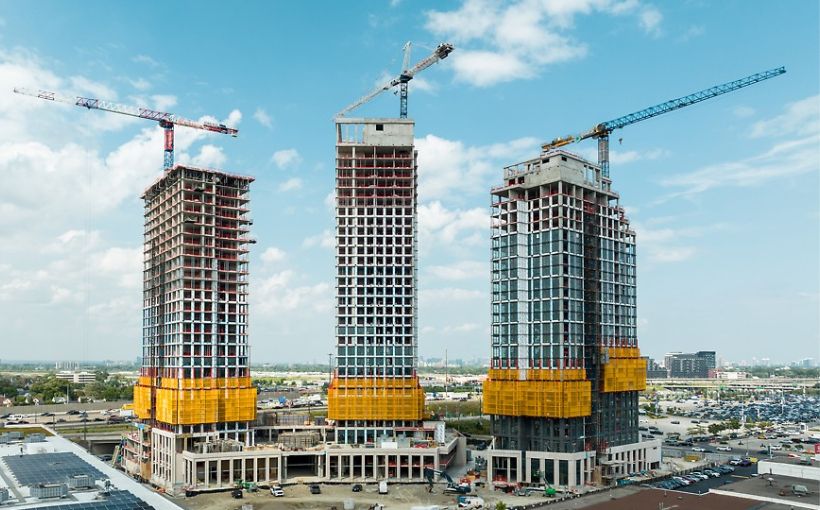
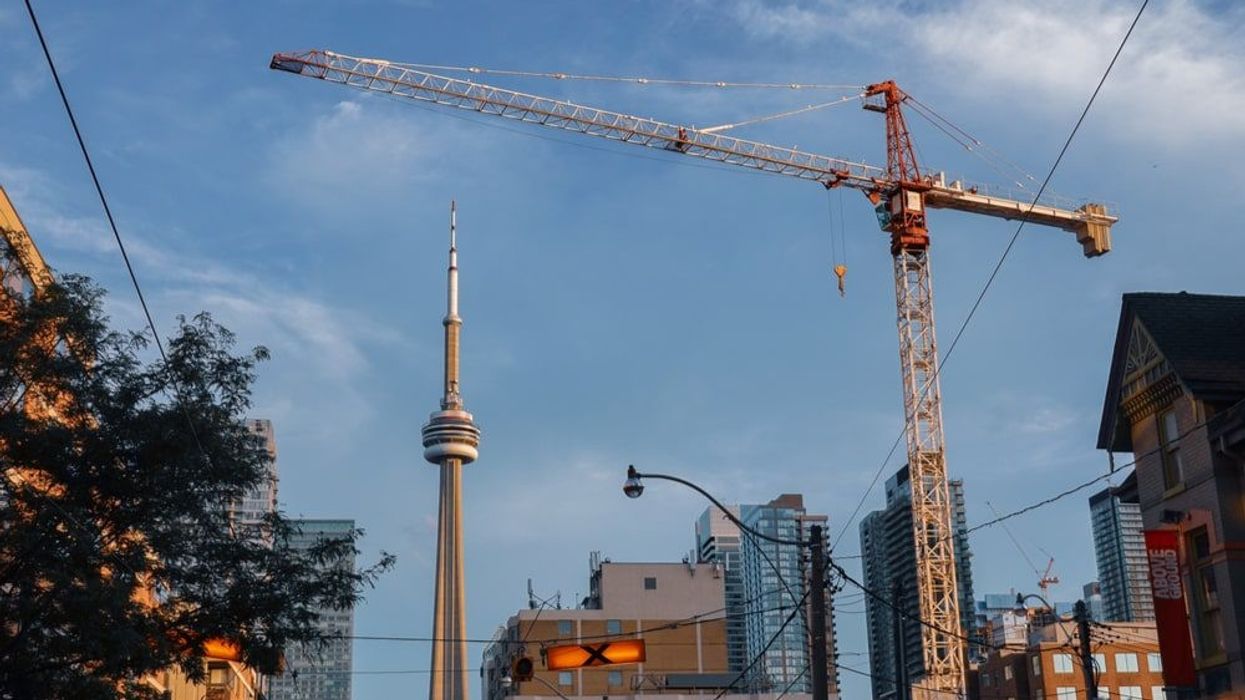
For more than a decade, the Greater Toronto Area has been defined by motion. Cranes stretching across the skyline became a symbol of growth, confidence, and relentless urban expansion.
But in 2026, that picture is changing.
According to recent construction tracking, the number of cranes operating across the Greater Toronto and Hamilton Area has declined for the second consecutive year. As of January 1, 2026, there were 235 cranes active across the region — 44 fewer than the year before.
This shift is more than visual. It represents a deeper recalibration in the development cycle — one that will shape housing supply, rental dynamics, and investment strategy for years to come.
Understanding GTA construction trends 2026 is no longer just for developers and planners. It matters to landlords, investors, policy-makers, and anyone with a stake in the future of housing.
What the Crane Count Really Tells Us
At first glance, fewer cranes might suggest a simple slowdown. But the story is more layered.
Across the GTHA, there are still more than 200 active projects using nearly 300 cranes, building over 400 structures. Construction hasn’t stopped — it has become more selective.
Toronto, Hamilton, and Halton have seen notable declines in active projects, while York and Peel regions have experienced modest gains. This geographic shift reflects a broader rebalancing of where growth is happening and where development is becoming harder to sustain.
From a macro perspective, GTA construction trends 2026 show three clear signals:
Capital is becoming more cautious.
Projects are concentrating in fewer locations.
The overall pipeline of new housing is thinning.
For the region’s housing ecosystem, this means existing supply will carry more weight — and more responsibility — than ever before.
Why Construction Trends Matter to the Rental Market
New construction isn’t just about skyline aesthetics. It directly affects affordability, vacancy rates, and tenant choice.
When development slows while population growth continues, pressure builds across the rental sector.
Toronto and the surrounding regions remain magnets for newcomers, students, and young families. Even as interest rates fluctuate and homeownership becomes harder for many, the demand for rental housing continues to rise.
In this environment, GTA construction trends 2026 point toward a familiar outcome:
Tighter supply meets steady demand.
And when that happens, the spotlight shifts to the quality and performance of existing rental housing — especially multiplexes, mid-rise walk-ups, and small apartment buildings that form the backbone of the region’s rental stock.
The Growing Role of Multiplexes in a Slower-Build Era
While new condo towers often dominate headlines, much of the GTA’s rental stability comes from older multi-unit properties:
Duplexes and triplexes
Converted houses with legal suites
Low-rise apartment buildings
Purpose-built rentals from earlier decades
As development pipelines thin, these properties become even more important.
This is one of the most overlooked implications of GTA construction trends 2026:
the future of housing will rely less on what’s being built tomorrow and more on how well we manage what already exists.
For landlords, that shifts the competitive landscape. It’s no longer just about owning property in the right location — it’s about operating it professionally, sustainably, and with long-term vision.
Fewer Cranes, Higher Stakes for Existing Housing
When construction slows, three things tend to happen in tandem:
Rental competition increases.
Tenant expectations rise.
Regulatory scrutiny intensifies.
Municipalities, facing housing shortages, often respond by tightening oversight of existing stock — ensuring safety, compliance, and livability.
Fire code enforcement, property standards inspections, and licensing frameworks are becoming more common across the GTA. Multiplex owners, in particular, sit at the centre of this attention.
In this context, GTA construction trends 2026 are not just a development story — they are an operations story. The performance of existing rental housing will increasingly shape the region’s housing outcomes.
Why Market Cycles Reward Professional Operations
Boom cycles forgive inefficiency.
Transitional cycles do not.
As development slows, the margin for operational error shrinks. Buildings that are poorly maintained, inconsistently managed, or weakly documented will feel pressure faster — through higher turnover, compliance risk, and tenant dissatisfaction.
Conversely, well-run properties gain an advantage.
This is where professional property management becomes part of the macro story. Firms that specialize in structured operations — especially for multiplexes — are quietly shaping how landlords adapt to changing GTA construction trends 2026.
AVS Hospitality, for example, has built its approach around what it calls “institutional-lite” management — applying the discipline of large portfolios to independent landlords who want stability without bureaucracy.
Their philosophy can be explored further at https://avshospitality.ca, where operational excellence is positioned as a strategic asset, not just a service.
Construction Slowdown and the Shift in Investment Thinking
For investors, the crane count offers an important signal.
When development pipelines thin, the replacement supply of housing becomes harder to deliver. That changes how value is created in real estate.
Instead of relying on appreciation driven by new builds, investors increasingly focus on:
Asset quality
Operational performance
Tenant retention
Cost control
Regulatory resilience
This shift aligns perfectly with the realities of GTA construction trends 2026. In a slower build environment, long-term returns depend less on market momentum and more on management discipline.
Multiplexes, in particular, benefit from this mindset. They perform on fundamentals: shelter demand, neighborhood stability, and operational efficiency.
The Technology Factor in a Slower Market
Another underappreciated element of today’s construction trends is how technology is reshaping property operations.
As new supply becomes harder to add, the efficiency of existing housing becomes more critical.
Modern property management now relies on:
Digital rent collection
Maintenance tracking platforms
Owner reporting dashboards
Automated communication systems
Compliance documentation tools
These tools don’t just make life easier — they make housing more resilient.
In the context of GTA construction trends 2026, technology allows landlords and managers to extract more performance from the housing stock that already exists, helping bridge the gap between demand and supply.
Why Regional Differences Matter More Than Ever
One of the most interesting aspects of current crane data is how uneven the slowdown has been.
Toronto, Hamilton, and Halton have seen noticeable declines. Meanwhile, York and Peel have posted modest increases in activity.
This unevenness tells us something important about GTA construction trends 2026:
growth is not disappearing — it is redistributing.
For landlords and investors, this means location strategy must evolve. Markets that once relied heavily on new development may now lean more on operational optimization of existing properties.
In these areas, professional management becomes a competitive differentiator — not just a support service.
What This Means for Housing Policy
At a policy level, fewer cranes raise serious questions.
Ontario continues to face ambitious housing targets, but market conditions are making delivery more difficult. Rising construction costs, financing challenges, and regulatory complexity are slowing the pace of new starts.
As a result, policymakers are increasingly focused on:
Protecting existing rental stock
Encouraging gentle density
Supporting secondary suites
Preserving older apartment buildings
Stabilizing landlord-tenant relationships
These priorities align directly with the realities of GTA construction trends 2026. The future of housing will depend less on how fast we build and more on how well we manage what we already have.
Why Multiplexes Sit at the Center of the Next Cycle
Multiplex properties represent a bridge between large institutional rentals and small private housing.
They are:
Scalable
Community-embedded
Operationally efficient
Critical to affordability
As construction pipelines thin, multiplexes will increasingly carry the weight of rental demand — especially in established neighborhoods where new development is constrained.
For this reason, many of the smartest investors are doubling down on professionalizing how these assets are run.
This is where firms like AVS Hospitality play a subtle but meaningful role in the broader GTA construction trends 2026 narrative — helping landlords stabilize and future-proof the housing that already exists.
You can explore their full management model at https://avshospitality.ca/property-management, where the focus is on long-term performance rather than short-term fixes.
The Strategic Opportunity in a Slower Build Market
A construction slowdown isn’t just a challenge — it’s an opportunity.
When fewer buildings are added to the skyline, every existing property matters more. Every unit becomes more valuable to the housing ecosystem.
For landlords, this creates a powerful incentive to think beyond short-term rent increases and focus on:
Tenant experience
Preventive maintenance
Compliance leadership
Operational transparency
Portfolio strategy
These are exactly the areas where professional management shines.
In the era defined by GTA construction trends 2026, the landlords who win won’t be the ones chasing the next boom — they’ll be the ones perfecting the fundamentals.
Calls to Action
If you own rental property in the GTA — especially a multiplex — this is the moment to reflect on how your assets are positioned for the next phase of the market.
Construction may be slowing, but expectations are rising.
If you want to explore how professional management can strengthen your portfolio in the context of evolving GTA construction trends 2026, start by visiting https://avshospitality.ca to learn more about AVS Hospitality’s approach to modern property operations.
For a deeper look at full-service solutions designed for multi-unit landlords, visit https://avshospitality.ca/property-management and see how structured systems can turn uncertainty into opportunity.
Final Thoughts: Reading the Skyline
The skyline has always told Toronto’s story.
In the past, more cranes meant growth.
Today, fewer cranes signal a shift — not an end, but a recalibration.
GTA construction trends 2026 reflect a market entering a more disciplined phase, where quality matters more than quantity and performance matters more than pace.
For landlords, investors, and housing leaders, the message is clear:
the next chapter of the GTA’s housing story will be written not just by what we build — but by how well we manage what already stands.
Get in Touch
📞 Call: 647-294-5111
📧 Email: contact@avshospitality.ca
📲 Instagram: @avs_hospitality
▶️ YouTube: AVS Hospitality Channel
👉 Website: AVS Hospitality