


In 2026, rental ownership is no longer defined solely by appreciation and rent collection. It is defined by risk management, compliance precision, operational discipline, and structured execution.
The concept of the Landlord Risk Buffer reflects this shift.
Historically, many landlords approached property management as a convenience decision. If tenants were stable and maintenance was manageable, self-management appeared efficient. When cash flow felt predictable, hiring professional oversight seemed optional.
That mindset is increasingly outdated.
The Landlord Risk Buffer represents a structural layer between the landlord and the volatility inherent in rental property. It is not simply about delegating tasks. It is about insulating the asset from legal exposure, operational breakdown, tenant mismanagement, and preventable financial leakage.
As regulatory environments tighten and margins compress, the Landlord Risk Buffer becomes less of a luxury and more of a performance requirement.
Why Self-Management Feels Efficient — Until It Isn’t
When everything functions smoothly, self-managing a rental property can appear straightforward. Rent arrives. Tenants are responsive. Maintenance is minimal. Communication remains cordial. The owner retains full control and avoids management fees.
But smooth months do not stress-test an operating system.
Risk does not appear gradually. It arrives abruptly — often in the form of missed rent, improperly served notices, building code complications, insurance disputes, or mechanical failure at inconvenient hours.
The Landlord Risk Buffer exists precisely for these inflection points.
Most landlords do not buy insurance because they expect catastrophe. They buy it because they understand that catastrophic events are unpredictable and expensive. The Landlord Risk Buffer applies the same logic to rental operations. It formalizes prevention before volatility emerges.
The Regulatory Density of 2026
Rental property in 2026 operates within a far more complex regulatory framework than it did a decade ago.
Procedural accuracy now determines timelines in eviction matters. Documentation quality determines enforceability. Renovation decisions require careful attention to municipal bylaws, safety codes, and licensing requirements. Insurance carriers are increasingly sensitive to property configuration and maintenance history.
In this environment, the Landlord Risk Buffer functions as procedural infrastructure.
Serving an incorrect notice can reset legal timelines by months. Failing to document payment arrangements can undermine enforcement. Undertaking structural alterations without permits can trigger penalties that materially impact returns.
The Landlord Risk Buffer mitigates these exposures through standardized process, legal familiarity, and structured record-keeping.
This is not theoretical protection. It is measurable risk reduction.
Operational Risk: The Hidden Erosion of Profit
Not all risk is dramatic. Much of it is incremental.
Deferred maintenance slowly compounds. Poor tenant screening increases default probability. Informal lease modifications create ambiguity. Vendor pricing varies without procurement discipline. Communication delays escalate minor frustrations into formal disputes.
The Landlord Risk Buffer addresses operational drift.
Preventative maintenance schedules reduce emergency calls. Structured tenant onboarding reduces misunderstanding. Centralized documentation ensures consistency. Vendor networks create cost predictability. Financial reporting clarifies performance trends.
In multiplex properties especially, operational risk multiplies. Shared systems increase exposure. One mechanical failure can affect multiple households. Noise disputes or utility allocation errors can escalate quickly if not handled professionally.
A properly implemented Landlord Risk Buffer prevents minor issues from cascading into systemic problems.
Financial Stability Through Structured Oversight
Many landlords track performance informally. Bank deposits are monitored. Expenses are recorded at tax time. Profitability is evaluated annually.
This approach overlooks the dynamic nature of rental economics.
The Landlord Risk Buffer incorporates structured financial reporting and forecasting. Cash flow trends are monitored monthly. Maintenance reserves are planned. Arrears are tracked with precision. Capital expenditure is evaluated strategically rather than reactively.
In 2026, financing conditions remain tighter than in previous cycles. Lenders evaluate income reliability and expense control carefully. Owners who operate without structured oversight risk underperformance that is not immediately visible.
The Landlord Risk Buffer transforms property management from reactive bookkeeping into proactive financial governance.
Emotional Bandwidth and Decision Quality
Risk is not purely financial or legal. It is cognitive.
Landlords who self-manage absorb tenant communication, emergency calls, scheduling coordination, documentation responsibilities, and compliance monitoring. Over time, this accumulation affects decision-making quality.
Stress compresses perspective. Urgency replaces strategy. Short-term fixes override long-term optimization.
The Landlord Risk Buffer reintroduces separation between ownership and daily operations. That separation restores clarity.
When owners are not managing emergencies directly, they evaluate capital improvements more objectively. They negotiate acquisitions more strategically. They assess portfolio growth more rationally.
Professional structure creates psychological distance — and that distance improves outcomes.
The Multiplex Variable
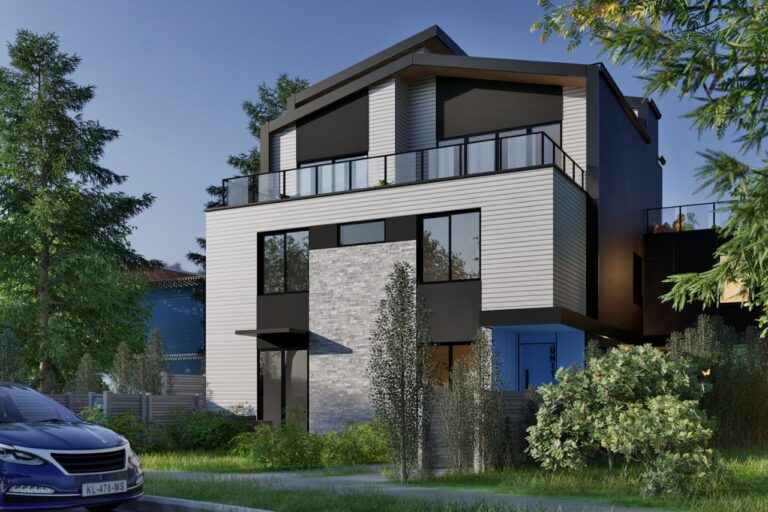
As housing supply strategies encourage increased density, multiplex ownership continues to expand. Duplexes, triplexes, and fourplexes offer improved revenue diversification but introduce operational complexity.
The Landlord Risk Buffer becomes particularly valuable in multiplex environments.
Tenant screening must account for shared living proximity. Noise and behavioural disputes require mediation skill. Utility infrastructure must be properly allocated and maintained. Fire code and safety standards must be adhered to rigorously.
Multiplex assets without structured management expose landlords to amplified risk. One mismanaged unit affects others. One system failure disrupts multiple tenancies.
A well-developed Landlord Risk Buffer contains these exposures before they destabilize the property.
Timing Matters
A common mistake among rental owners is implementing management support after problems arise. Arrears accumulate. Legal deadlines are missed. Maintenance backlogs form. Tenant relationships deteriorate.
At that stage, intervention becomes corrective rather than preventative.
The Landlord Risk Buffer is most effective when applied while the asset is stable. Stability allows for system implementation without crisis pressure. Documentation can be standardized. Maintenance schedules can be introduced calmly. Tenant communication frameworks can be clarified.
In 2026, waiting until volatility appears is the most expensive strategy available to landlords.
A Structural Decision, Not an Emotional One
The decision to establish a Landlord Risk Buffer should not be driven by frustration. It should be driven by strategic positioning.
Rental ownership is a business. Businesses implement controls, oversight, reporting, and compliance systems because they reduce downside exposure.
The Landlord Risk Buffer is simply the formalization of that discipline within residential real estate.
As operating environments mature, amateur structures struggle. Professional structures compound.
Landlords who treat property management as risk architecture — rather than rent collection — are positioning themselves for resilience.
The 2026 Reality
Rental income in 2026 remains attractive. Demand for housing persists. But the era of effortless management has passed.
Regulatory expectations are higher. Tenant awareness is stronger. Maintenance costs are rising. Documentation standards are scrutinized. Insurance carriers are more selective.
In this environment, the Landlord Risk Buffer is not about pessimism. It is about prudence.
It transforms rental ownership from reactive participation into structured stewardship.
And over a decade-long horizon, structured stewardship consistently outperforms casual oversight.
Get in Touch
📞 Call: 647-294-5111
📧 Email: contact@avshospitality.ca
📲 Instagram: @avs_hospitality
▶️ YouTube: AVS Hospitality Channel
👉 Website: AVS Hospitality